
Women are claiming their space, and rightfully so. Story of Gunjan Saxena’s success against absolute odds will stream in a few days. Last month, the government approved a permanent commission to women officers in the army after 15 years of the legal battle. Though these stories of getting mere existence recognized are just beginning of the battle, These are occasions to recognize the struggle of Women and celebrate their hard-earned successes. I use this opportunity to draw attention to the forgotten foot soldiers in a totally different battlefield: Aanganwadi Sevika. Who are these omnipresent women on the village landscape laced in pink Saree?
Anganwadi Sevika (hereafter AWS) is administering Anganwadis, a preschool cum preventive health centre, in every neighborhood of 100-200 households. For some context on their work profile, if they were on LinkedIn, job description of these AWS would have looked something like what I have written below in Sample CV.
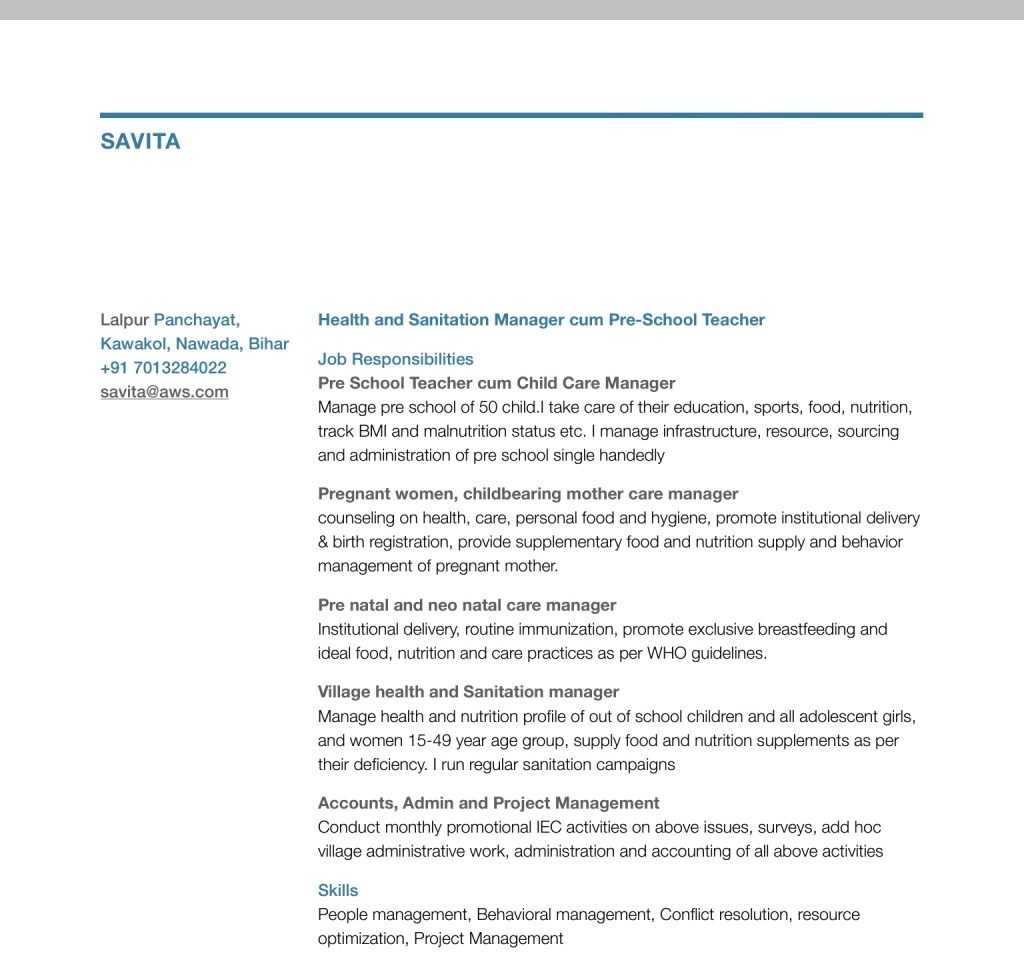
Savita personifies the above mentioned powerful profile which can make a recruiter or Ivy League selection panel roll their eyes. If they actually do wonder, why are they invisible? Let’s have a peek in the life of Savita along with one of her beneficiary(or ‘celebrated client’ as LinkedIn honcho will name them). Kamla’s family consists of 5 members (herself, husband, 4 yr Sumit, 3 mth old newborn Sima, and a 13 yr old school dropout sister in law Sujata). Like working women, does Savita also finish her household chores and family responsibility before starting her official day?
Savita does not get that ‘luxury’. Her official day starts early at 6:45 AM cleaning and preparing the Anganwadi(pre/playschool) for children. Remember all the news about revolutionary New education policy approved last week, it starts in Savita’s backyard as per school education. Fifteen minutes later, 20-50 children including Kamla’s son Sumit will come to Anganwadi for preschool education. While handling one child is a nightmare for modern moms, Savita will engage with 30 of them for 4 hours with limited resource as study material and play equipment. She will teach them, make them sing, play, dance, fight; basically, everything that children love to or love not to do. Only if teaching was the most challenging part of her job.
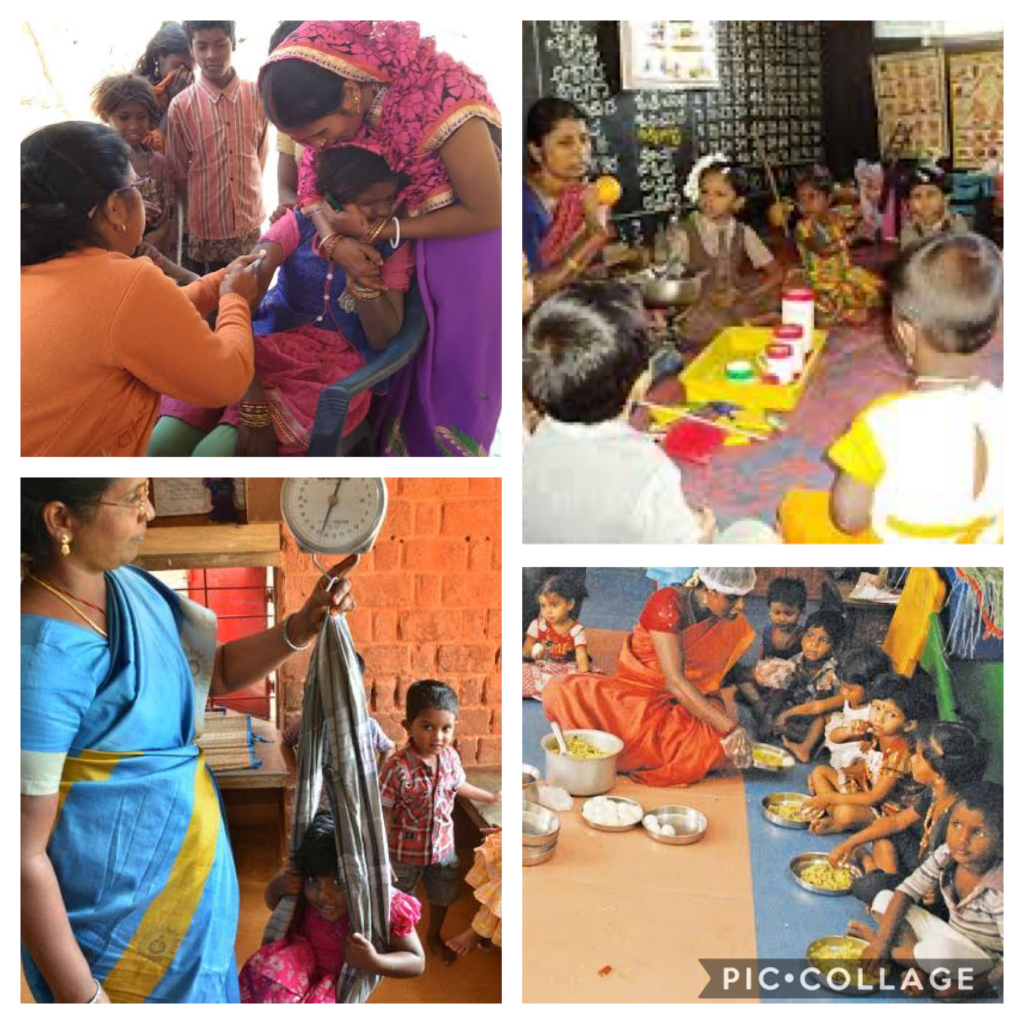
She is responsible for their health and nutritional status. Savita will get food cooked for all the kids and get it served to them. She maintains a monthly status register with detail of height, weight, and growth of each child to track malnutrition, stunting, and wasting status. Based on the health and nutrition profile, she is obligated to arrange for extra nutrient food supplements or even recommend severely malnourished children to the district center for nutritional recovery. Not ‘just’ a teacher, she is a semi doctor cum nutritionist, supposedly a highly paid job. But these kids are the only first cohort of her celebrated clients.
The next cohort is pregnant women, women with newborns, and children age between 0 to 3 years. Last year when Kamla became pregnant for her second child Seema, Savita visited her to assess her health and economic status and daily workload. She trained Kamla with all do’s and don’ts of food, nutrition, hygiene, workload, and mental and behavioral practices to be followed and regular check-ups to be done during pregnancy. Savita makes similar visits to other pregnant women, supply food supplements as well as to conduct monthly group sessions for the same. That food supply means she is also handling periodic backward supply chain and feedback. Does her role end here?
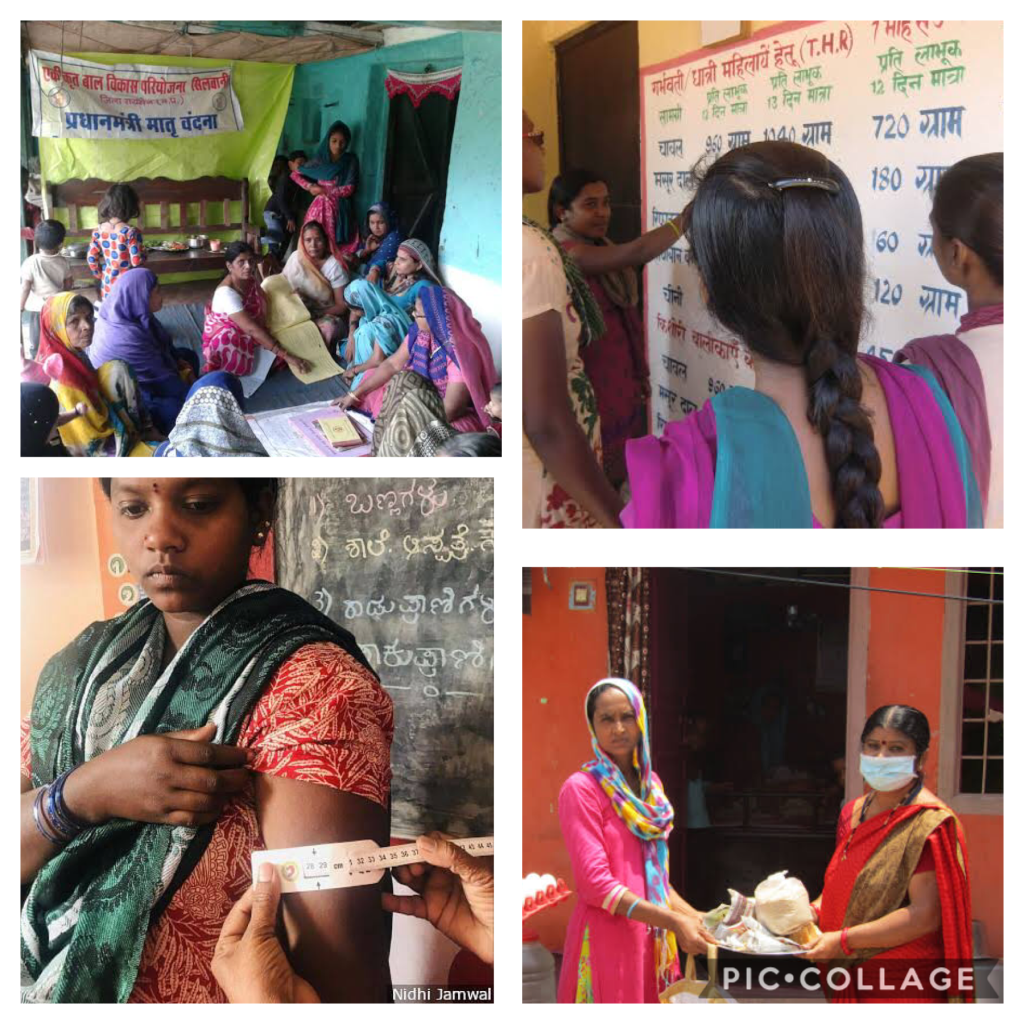
Now that a healthy kid like Sima is born Savita’s job evolve to help Kamla (and similar others) follow Routine Immunization, check-ups, and healthy food, nutrition, and hygiene practices for mother and the newborn. She has to make sure that the newborn goes through all of it religiously till s/he lands in her preschools (become 3 yr old). Her client matures from one cohort to another.
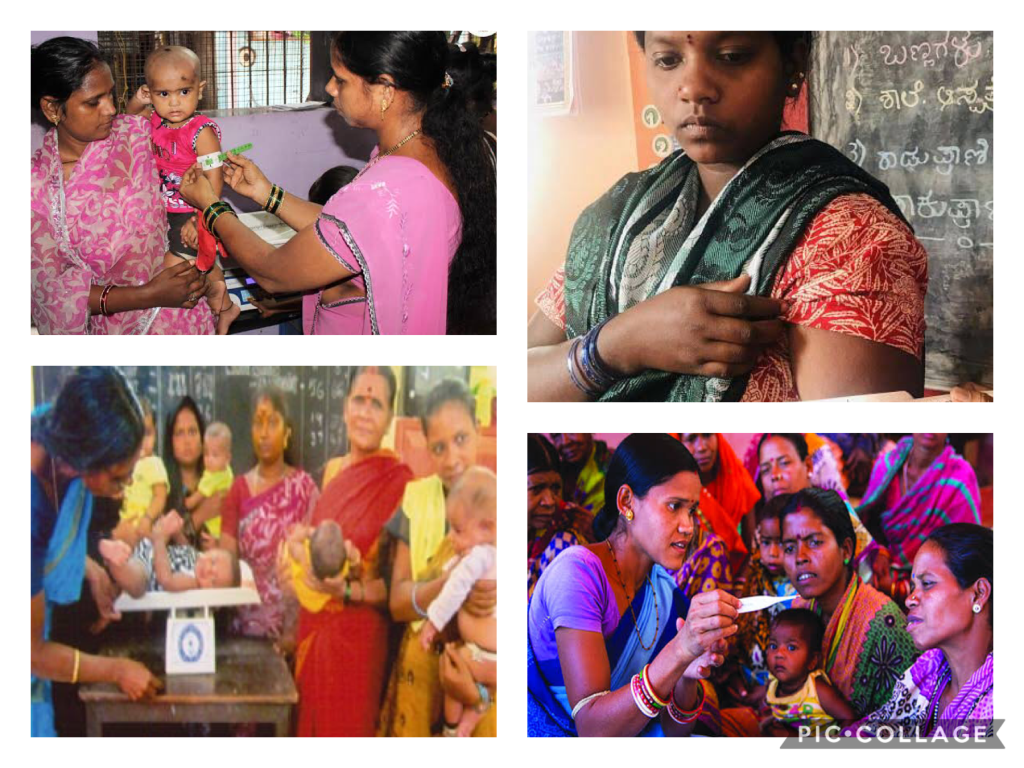
How can her job end before serving all members of Kamala’s family? She has to find time for Sujata and other adolescent girls in the village. She counsels them on menstruation, expected physical, hormonal and behavioral changes, hygiene practices to be followed, and delivers sanitary pads and iron supplement tablets. A difficult job to do justice to. And it’s not about only operations, she also has to lead teams and conduct regular stakeholders meeting on health, nutrition, sanitation, women issues, etc.
So what is so big about it? They are doing work that any women are good at doing. And it’s all about doing the same thing repetitively. Such stereotypical arguments are at the core of why they are being ignored or taken for granted. Their agility, dynamism, and tech-savviness are reflected in ad hoc projects that they do so efficiently. It was one such ad hoc project which brought me into direct contact with these super-skilled girls.
I and my colleague were tasked to do biometric registration of 1.5 Lakh Health Insurance beneficiary households(5-6Lakh individuals) of a district and provide Rashtriya Swasthya Bima Yojana card. It needed to organize nearly 500 camps at sub-village level across 180 Panchayats spread across 2500 sq KM area within a 2-month time span with no dedicated organization structure to deploy. We were surprised to know that we will get 500 Savitas to meet this mammoth operation intensive task.
But All our fear, prejudicial mistrust and anxiety evaporated within first few days of working with this agile workforce. They needed to way out of their comfort zone to understand themselves and convince people on following.
- Concept and features of an insurance product.
- Why health insurance is important?
- Need of paying premium for insurance.
- Why this premium is legit and not just another bribe.
- Process of getting treatment in exigency?
- which hospitals are enlisted?
They did door to door campaigns answering the above questions and inviting people to enrollment camps. The two most difficult parts were: First, convincing someone to leave one day wage for enrollment. It required persuasion skills. And second, why Mr. A is a beneficiary and Mrs. B is not. It required intense conflict resolution. Could they do justice to the asks of the enrollment project?
As if the task itself were less demanding, they delivered beyond the charter. Some of them were good enough to be used as trainers to train others for the next set of camps. We found these women running across village convincing people to get enrolled, arranging infrastructure logistics like electricity connection/generator, handling the crowd, and most importantly ensuring that no one beats enrollment operator (or us) for why someone’s name is not in the beneficiary list. They even did enrollment entries in databases and printed cards during a shortage of operators to increase enrollment percentage. These women knew the pulse of their people and command immense leverage among them. They showed complete ownership, efficiency, interpersonal skills, and adaptation to the uncharted territory of work which they are not recruited or trained for. Any other external agency, however much trained, won’t have achieved even half the enrollment coverage and would have got beaten many times for none of their faults.
This project apart, with their professional and personal skills, such foot soldiers achieve everything which our governments claim in advertisement or officers claim in their social media posts or awards. There is no reason why the above sample CV points and elaborated job description won’t draw a six-digit salary or even get through the Ivy League selection process. If ever our modern startups decide to penetrate in the real rural market and trying to solve the last mile workforce problem, they should give the network of such workforce a thought as an option. They can sell SME/agriculture loans, insurance products for a fintech, revolutionize digital payment adoption of small ticket size transactions in villages or provide last-mile connectivity to women and child care services and products.

While I got to write about the “success” of the enrollment project in my CV, LinkedIn profile, and blabber about it in the UPSC interview to get top marks, they get no recognition. When I was searching for a representative photo of Aanganwadi to be put in this write up, I found more photos of them protesting for their rights and recognition and getting beaten by police than them doing the mountain load of work elaborated above thanklessly. While we celebrate the success of Gunjan’s battle, let’s also talk about, recognize, and appreciate works many Savitas and if possible, give them their dues.
Special thanks to…
- Deepak Kumar, My PMRDF colleague, an expert on nitty gritty of administration especially of welfare schemes.
- Bhawana Upadhyay, My PMRDF colleague who owned the enrollment project
 अंतर्देशीय
Very pertinently worded. And couldn’t agree more.
Third tier of polity should be urged to institutionalise AWS system to make it at least well paying.
One point for you to note:
Few paragraphs are repeating in between..
Keep writing!
LikeLike
Such an interesting read. I wonder if I could ever get such an insight into the working of these wonder women other wise. Thank you for keeping me so glued to this screen 8-10 min. Keep writing.
LikeLike