
In a civil services interview, before our performance decides our marks, our approach and preparation determine on which side of 180(marks will we end up. I attempt to highlight dos and don’ts to make sure aspirant prepare for the right side of 180. Results just got released last week. Successful aspirants should have started preparation for the Personality Test (not interview). Having had the privilege of being in the so-called “Destiny Room” thrice and done reasonably well, I will attempt to share my experience and to clear the mist off some misconceptions.
For the sake of bringing some credibility to this writing, I am putting my Personality Test (Not Interview, at the cost of repeating myself) scores here.
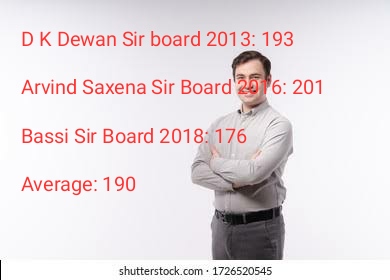
Guiding Principles: Personality over Generality
The core of preparation should be the focus on self, own personality and how to highlight personality traits. No aspect of preparation should be isolated from or independent of the profile, DAF and personality traits. Keeping this in mind, the following are the aspects which will make the 30 min discussion engaging for both panellists and candidate, and achieve good marks.
1. Specific: 3rd level detail
Go specific, If possible to the extent of 3rd level data to put your points. This is more so important with core questions like why civil services, why IAS, why you etc. I have depicted the sample answers with first, second and third level details in the image below.
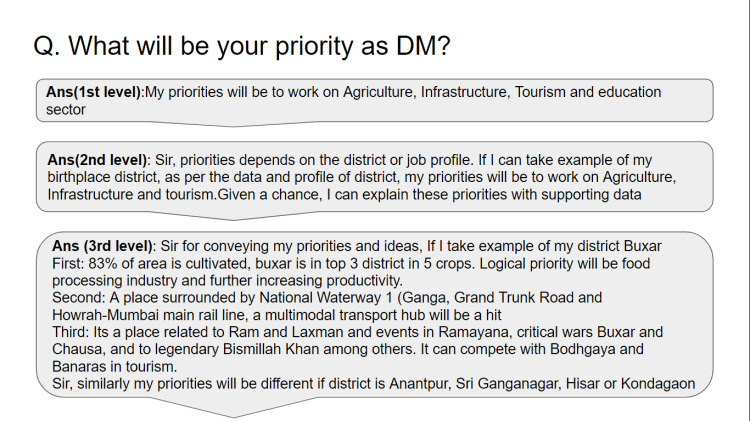
While preparing answers, check if you can be more specific and exact with ideas, reasons and still keep it crisp to finish the answer in 1 to 1.5 min. One can go even further and add a leading statement in the end as “similarly priorities will change if the district is Ananthpur, Sri Ganganagar, Narayanpur Or Hisar”. With such a leading end line, an aspirant is showing willingness to take more questions.
Another important dimension to specificity is replacing quantifiers with proper examples. Phrases like any, many, a lot of, too many, various, several etc if replaced with exact data and examples will make answer specific and help you guide the discussion to your strengths, prepared areas.
2. Focus on profile and self
Do not spend too much time on the current affair in general. Your 80% effort should go on your DAF, life, experience, vision, strengths, dream and personality traits. The remaining 20% effort on general awareness and current affairs should also be in a way that topics relate to your DAF and answers convey some of your personality traits. Current affair based preparation prepare you for answering questions factually. Just answering factually is an interview, not a personality test.
Natural next suggestion is to not waste time on transcripts of other candidates. Someone was asked those specific question as per their DAF or as a follow up of their answers(good or bad). If not, then those are anyway general dry questions independent of profile. Though, One can analyse in another’s transcript why he/she was asked those questions rather than making answers of them for self.
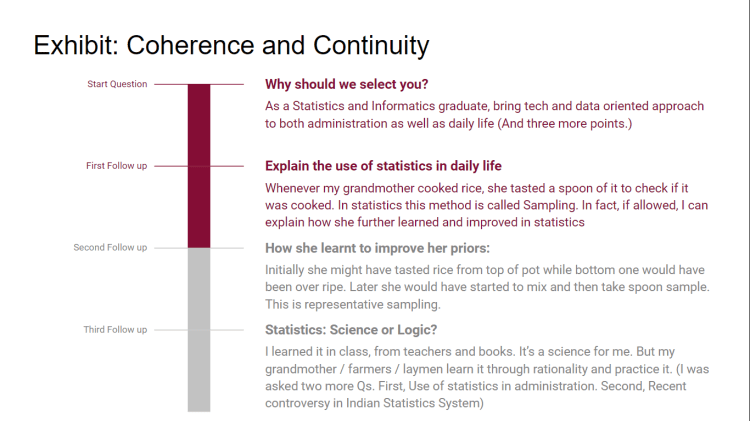
3. Coherence and continuity
A good personality test session shows continuity and coherence. If all 5 questions asked by panel members were all unrelated to each other or your consecutive answers, they are discrete, dry and more like technical interview than an engaging personality test.
An engaging personality test is one in which your answers poke the panel members to forget their planned questions and get tempted to ask things related to your answers and hence extract your personality traits. The continuity and coherence must be displayed at least within all questions of one panel member. But if other panel members also take cue from your answers, one thing you have achieved is engagement with all. One way to achieve coherence, continuity and engagement is adding leading statements to your answers which I will talk about later in this write up.
4. Simple: Dumb down answers
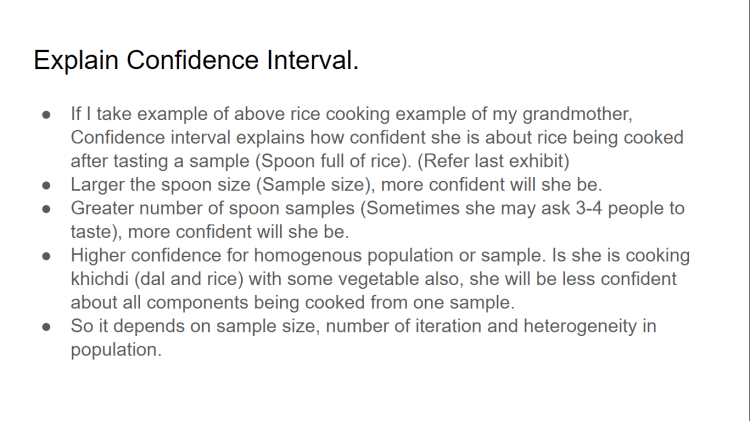
Always check if a 10 year old kid, any illiterate adult, your grandmother or for that matter, any sane person can easily understand your answer, irrespective of technicality and complexity of the question. It is very important that the answers are simple, lucid with zero pre requisite to comprehend and understand it. Auditing my answers on this trait while preparing has done wonders for me. I was asked “Explain concept of Confidence Interval”. I have put my answer in exhibit below.
5. Personal:”My answer” over “the answer”
The panel is not looking for “The answer” to a question, they are there to listen to “your answer”. While preparing, If I frame an answer, I must audit it by asking myself if anyone else can borrow this answer of mine in its entirety. If yes, then it’s not my answer and hence not 170+ deserving answer. This is more so important for 5-10 core questions to the personality test. (Why Civil services/Why IAS/ Why left a job in private sector/ your priority as DM or SP, why a particular order of service or cadre/ strength and weaknesses etc)
6. Highlight Uniqueness
Try and highlight the uniqueness in your profile during the personality test. Talking to 12 candidates a day for nearly two months is exhausting and boring for the board chairman. By the time your turn comes, he would already have heard all general and cliche things. Uniqueness has to be highlighted to stand out.
This can be done in two ways. First, focus on bringing in points From DAF which are unique and found only in few profiles. From my profile, I guide my interview towards being a statistics graduate, product manager in a private company, worked in ride-sharing Startup, later as PMRDF in Naxal affected district, a curious traveller in Indian Railway(hobby) and my obsession with operations projects.
The second way is to frame even a general aspect of the profile uniquely. See the image below and try making a similarly unique way to discuss even very general and common issues.
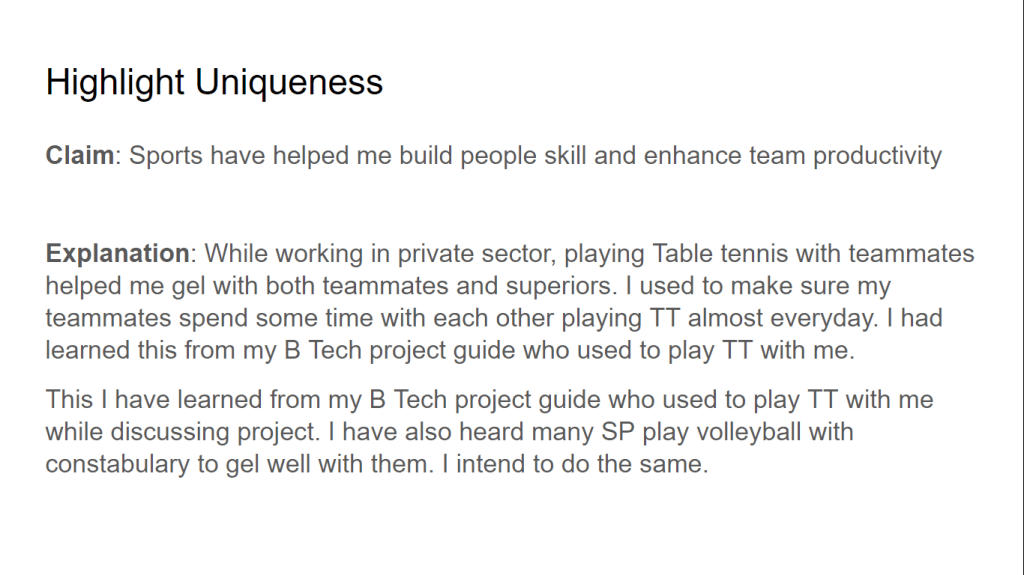
Here it is important to stay clear of cliche, obvious things or just static facts. So just highlighting “school awards” or “being from IIT” or “having worked in an MNC/Pvt company” or “worked with NGO” etc are not uniques. They are just static facts and convey nothing about our choices, interests.
Though adding specificity to these will make them unique. “Worked on decreasing single-use plastic(teaching poor children/Covid awareness etc) with NGO” Or “worked in evolving logistic/ed-tech/fin-tech sector with a startup/leading company” or “I had the most vibrant and enriching campus life not just academically but more so otherwise which has a major impact on my personality and learning (IIT)”.
Other possible unique aspects are reading 10+ book from a very specific genre, travel to 10+ places of a particular type, blogging(at least 10+ blogs), state-level awards in academics or sports etc. Some specific professional expertise or inclination can be unique.
I used to claim that “I am obsessed with operational efficiency and like works of large scale and operational complexity in following way. “Achieving intended outcomes in a project of large scale, inadequate financial and human resource, involving multiple teams still way before the deadline is very satisfying to me like I did as PMRDF and in OLA.” Don’t hesitate to highlight such unique inclinations, experiences or even urges and visions during discussion. Such claims poke interest, facilitate interesting conversation and get rewarded by marks.
7. List your own agenda
Aspirants still have at least 1 month and up to 2.5 months in hand. It’s advised to have at least five Points/things and if possible up to 10 things list which you prefer should be discussed in the interview. Let’s call this your agenda list. Prepare extensively on these 5-10 topics/aspects to an extent that you can answer up to the 5th level of a question with specific data and some personal touch. Every answer, if not every point, must depict some personality trait, ideas, vision etc of an individual. Listed below are some sample for own agenda list. I will also post my 10 point agenda list in the comment to this blog.
- State or district, their 2-3 challenges and personalized approach to solution
- One or two project(if experienced) or ideas (if fresher) which shows professional excellence,
- Experiences, ideas, anecdotes that show your emphasis on leadership, ownership, taking initiative, people skills etc
- Hobby
- At least one idea or vision related to administration
- Another idea/interest/vision outside administration (eg. how behavioural economics can bring social change if you are an economist, or how you feel lean entrepreneurship is the future of India). Having such dimension and bringing it into discussion proves your dynamism.
- Why you should be selected/ what you offer on the table.
- Education, specialization, how it helps in daily life and administration
8. The ultimate aim
Ultimately, it’s a personality test. The agenda list will be different for everyone, but the final aim is the same, highlight personality traits. The core of the 30 min discussion is to convey positive aspects of your personality. Whatever be the questions or their answers, ultimately most of the personality traits of the list below must be subtly conveyed. If you have not touched upon at least 5 of these traits in a 20-30 min discussion, you have not done justice to the occasion. And the onus is you to ensure that this get delivered, not panellists. Prepare accordingly. An indicative sample list of personality traits are listed below, followed with a sample situation.
- Professional competence
- Intent and ability to take initiative
- Intent and ability to lead (Leadership)
- Futuristic Dream, vision or ideas
- Modern, data and tech orientation, intent, approach
- Stay motivated and intention to motivate others, handling pressure
- Moderation in view and approach
- Communication clarity(not English)
- Listening and comprehension skills
- Logical structuring of problems, solutions and thoughts
- Personal and professional value, ethics, moral (obviously)
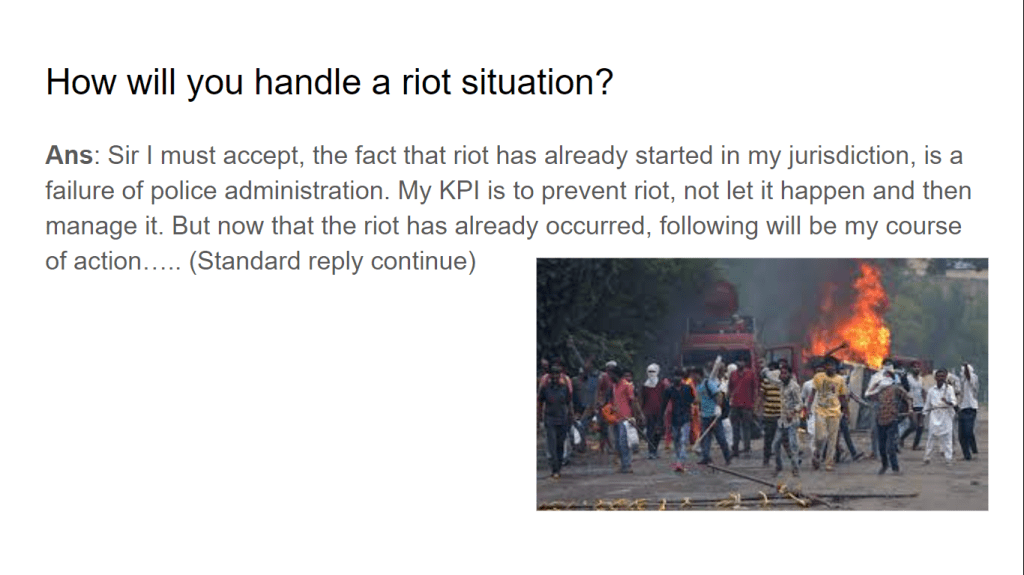
The answer in the image above highlight problem solving, going to the root of the problem, accepting failure and still resilience to tackle it.
Keep the trait list handy and map your answers to these or similar other personality traits. Your answers should convey these subtly, substantiated with experience or your views, ideas, vision etc. Just saying these traits in as many words do not convey that you have them or you value them.
9. Soft Control on discussion
Preparing extensively on the 5-10 agenda list, highlighting the ultimate list of personality trait and adhering to the above-detailed dimensions will help you lead the interview in the direction you want and to your strength. I suggest following to ensure the interview remain in the aspirant’s domain.
Add a leading line in your answers which points to the profile, strength or one of 5-10 desirable well prepared areas. Some sample examples are listed below.
- As a statistics graduate who appreciates data and statistics used in everyday life and administration…..(to emphasize the use of data)
- Having led various small and large team in 5 projects of varying scale, I value leadership trait as most important… (Instead of just answering “Leadership” in answer to “what is the most important trait for a civil servant”.
- Coming from and having spent 10+ year in an agro-based district Buxar my views are….(bring attention towards keyword “Buxar” while answering Farmer protest, which is extensively prepared).
- As a Table tennis enthusiast, I value pre-empting the next move and moving swiftly in the administrative decision. (If you want to bring TT in discussion and it’s not coming)
- As a student of geo…..
- Coming from/having worked in Naxal affected district Nawada/Rajnandgaon/Rayagada….. (So you lead the discussion on Naxalism in context of your state/district rather than just general and dry conversation on Naxalism as a whole.)
- As an avid blogger, I see a lot of potential of writing/blogging in bringing behaviour change (While answering What will you do on the issue of dowry, cleanliness, drug etc coz you want discussion on blogging)
- As a teacher, I know the importance of unlearning before learning while working in different social context….
- Having worked with two startups and spent time in the company of many entrepreneurs……
- As a travel enthusiast and someone who appreciate nature…..
- Coming from the rural setting of Nawada from Bihar, I incline to work in a rural setting… (While answering why Civil Services, direct interview towards Bihar or Nawada
Similarly, end answer with an open-ended statement pointing to things you prefer to be discussed. It’s better aspirant bring strong points of their profile to the discussion in the way they prefer and they are prepared for rather than the panellist bringing it in unprepared context or even worse, not bring it at all.
10. Who’s Responsibility?
I have heard a lot of aspirants complaining that interview was factual and it never came to their DAF or their strong and prepared areas. Remember that the onus is completely on the aspirant to bring the discussion on DAF or strong areas.
Questions remained factual because you never gave answers beyond dry facts. Discussions remained dry, disconnected and incoherent because you never gave answers that engaged panellists and poked them for multi-tier connected questions. They tried to demolish your calm or composure coz either you showed vulnerability early on or did not show mental resilience. One reason for this is giving too much importance to fate, the day, the so-called “terrifying” setting of room and the aura of panellists. I will cater to this psychological handling of the occasion in the end.
The don’ts of “personality test” preparation
- No cliche please. The statements like “I want to change India, serve India, serve poor, serve disadvantaged etc said in as many words convey nothing. Put vision, ideas, proposals briefly in your answers so that such message is conveyed in a subtle but effective way.
- No Extreme or controversial opinions. Not much explaining is needed here.
- No use of extreme or superlative adjectives. Overuse of adjectives in answers is a big turn off. They convey the lack of substantive content. Expressions like strongly agree/disagree, fantastic opportunity, devastating consequences of a policy or anything similar to these should be avoided
- No bluffing, manipulating, lying etc. Believe me, it’s evident on your face, your eye movements. Honest and transparent behaviour is a prerequisite.
- No more than 5 sentences and no more than 1 min of monologue in one go.
- Mock interviews only to accustom yourself to the interview setting. Don’t judge your performance by their opi
No “Elephant” in the room
Let us now address the psychological burden that an aspirant takes for a personality test. One big mistake is giving heavenly importance to the day, the panel members, the interview setting and the situation of the so-called “destiny room”. This creates performance pressure and drags us away from our natural self. Statements like “This day decides our destiny, should be taken with a pinch of salt.” Treat it like any other day. The table with 5-panel members deserve value no more than our family dining table, hostel mess table or at best office conference room table added just with some degree of mannerism.
It might seem oversimplification but I assertively suggest such an approach with experience and a sense of responsibility. There are chances you would have met one of the panel members in Metro or Uber Pool while going for the interview, don’t fear them, or overvalue them. Just like you should have offered a seat to him in Metro, show respect and mannerism while getting interviewed. Do not feel pressured or lose your natural self in an artificial aura of the day, the occasion or panel.
Convince the panel with all energy, intensity, ownership and natural self just like you convinced your friend why Rishabh Pant deserves to be in or out of the team, convinced your parents why they should accept your girlfriend or convince your boss why your idea will increase customer acquisition exponentially. Be nearly aloof to where and in front of whom you are sitting. Any normal day just needs a top-up of a bit of sweet anxiety, some seriousness and mannerism.
Be on right side of 180
With this write up, my aim is not to guarantee what range of marks you can or will get. I simply aim to guide you to prepare for 180-210 range marks. I have highlighted 10 principles which should guide the preparation and tried to address the elephant not present in the room.
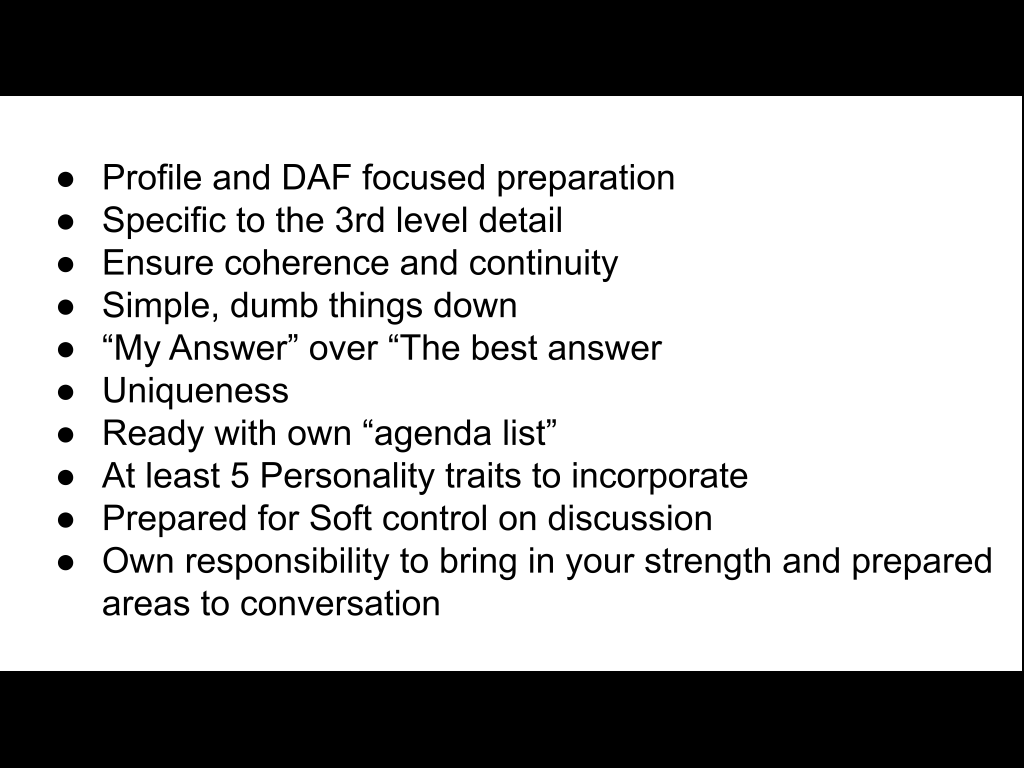
An interview prep focussed on profile, DAF, highlighting “ultimate list of personality”, with a clear and personal list of own agenda, adhering to simplicity, coherence and having a soft control on the discussion will rarely fall below 180. The approach exact opposite of this focussing more on external aspects, transcripts, isolated answers, facts will rarely go above 180+. Chose wisely between two rarities.
 अंतर्देशीय
Very helpful like a ship in the ocean.
LikeLiked by 1 person
Thanks
LikeLike
Really a much needed dose.
LikeLike
If it helps, I can plan second dose 🤣
LikeLike
Couldn’t find a better and comprehensive writeup on personality test than this. Thank u so much.
LikeLike
Thank You Rajhans
LikeLike
Lots of insight.
Worth to read gurumantra.
LikeLike
Thank you Umesh
LikeLike
This post has made me to completely reorient my strategy as if a eureka moment.
LikeLike
Thanks Sanya. Hope it will help you.
LikeLike
Really helpful… new perspectives added… keep writing such valuable stuff : )
LikeLike
Helpful, creative and bold approach Prabhat!
LikeLike
“The remaining 20% effort on general awareness and current affairs should also be in a way that topics relate to your DAF and answers convey some of your personality traits” sir can you please explain with example of how we can relate a current affairs topic to our personality ?
LikeLike
Thank you for such an insightful article, sir. I wish I had read it earlier. But better late than never. 🙂
LikeLike